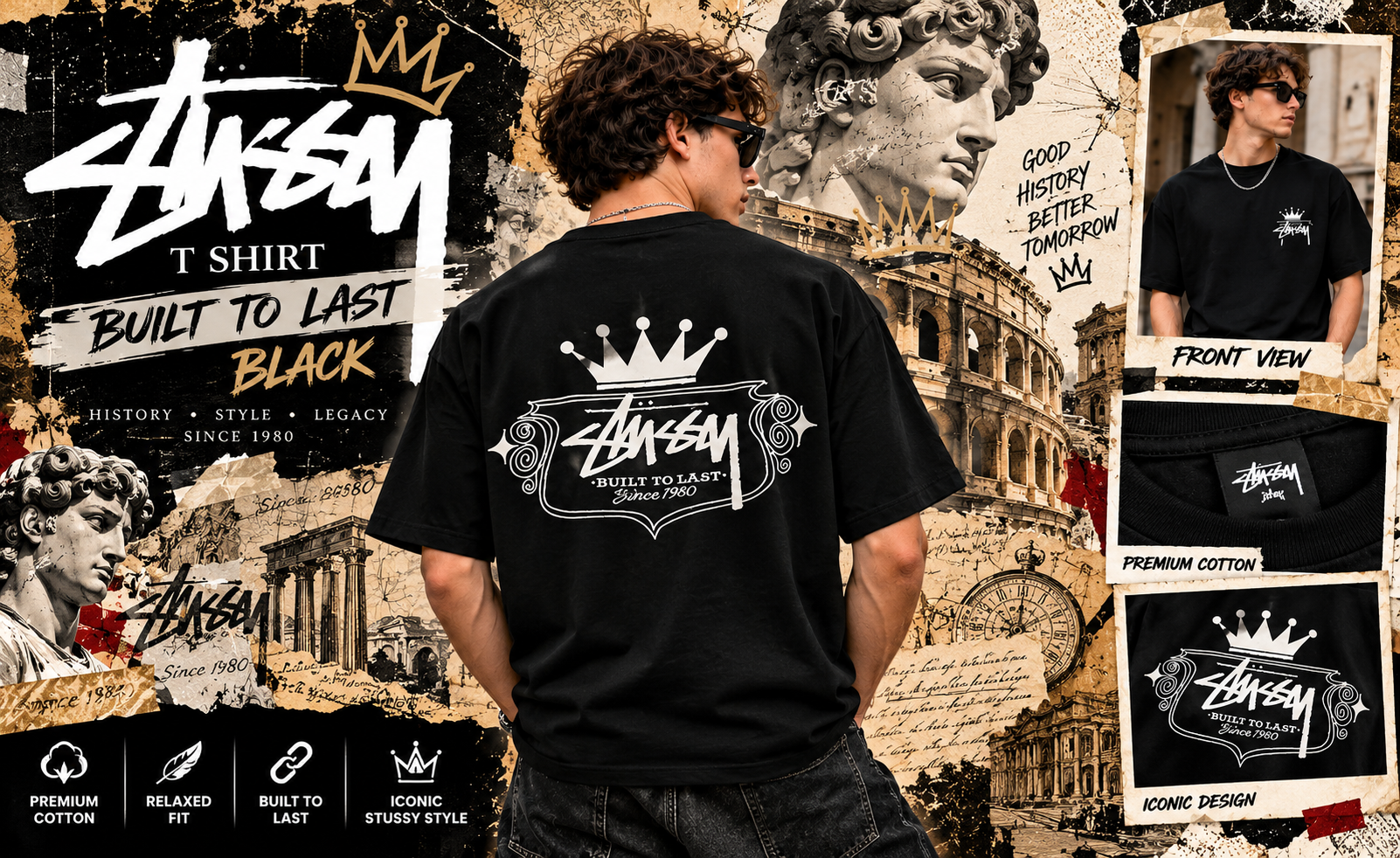
How did a hand-drawn surfboard signature scrawled in a Laguna Beach garage transform into the primary foundation of global streetwear culture? The history of stussy shirts is not just a tale of apparel manufacturing, it is the origin story of modern streetwear culture itself.
While our complete Stussy shirt guide covers contemporary sizing metrics, fabric weights, and care routines, this historical breakdown traces the lineage of the graphic tee. We explore how Shawn Stussy shifted from shaping foam surfboards to screen printing cotton blanks, building the iconic International Stüssy Tribe and defining subcultural style across four decades.
1980 to 1984: Laguna Beach and the Surfboard Signature Origin
The story begins in 1980 along the coastline of Laguna Beach, California. Shawn Stussy was an accomplished surfboard shaper known for crafting high-performance boards with unique outline curves.
To sign his custom boards, Shawn used a broad black marker to scrawl his surname across the foam before applying the protective resin coat. The stylized script borrowed aesthetic elements from punk rock graffiti and classic surfboard shaper logos.
To promote his surfboard line at local trade shows and beach pop-ups, Shawn decided to screen print that exact signature onto plain black and white cotton t-shirts. He sold them out of the back of his pickup truck alongside his surfboards.
Sales of the printed tees quickly outpaced the surfboards. Realizing the commercial pull of the graphic, Shawn partnered with Frank Sinatra Jr. (an accountant and business partner unrelated to the singer) in 1984 to formalize Stussy Inc. as a dedicated apparel brand.
1985 to 1989: The Birth of the International Stüssy Tribe
By the late 1980s, Shawn shifted his focus from local surf scenes to global youth subcultures. He recognized that skateboarders, hip-hop DJs, punk musicians, and club kids in major cities shared a unified aesthetic mindset.Stussy shirt
Shawn formed the International Stüssy Tribe (IST), a tight network of influential tastemakers across London, New York, Tokyo, Los Angeles, and Paris. Key figures included DJ Alex Baby, Michael Kopelman in London, Hiroshi Fujiwara in Tokyo, and Jules Gayton in New York. Shawn gifted members custom embroidered varsity jackets and limited-run graphic tees printed with their home city names. These city lists evolved into the iconic World Tour graphic tee in 1989. The front panel listed high-fashion capitals, while the back panel highlighted underground music districts like Brooklyn, Compton, and Venice.
Understanding how these archival graphics handle laundry care is essential for collectors. If you own modern reissues of these heritage designs, review our guide on how to wash Stussy shirts without fading to preserve screen-printed artwork.
1990s: Subverting Luxury Monograms and Pop Culture Icons
During the early 1990s, Stussy revolutionized graphic design by sampling luxury fashion motifs and pop culture symbols, blending high and low culture years before traditional fashion houses understood streetwear.Stussy shirt
Shawn introduced the interlocking “SS” Link logo, directly parodying the iconic Chanel monogram. He also adapted luxury typography and flipped corporate logos, transforming them into skate graphics.
During this decade, the 8-Ball graphic emerged as a permanent brand staple. Representing pool hall culture and unpredictable fortune, the graphic appeared on heavyweight cotton blanks that defined the 1990s baggy skate look. To learn more about collecting these iconic graphics today, browse our guide on the top iconic Stussy graphic shirts to explore their archival significance.
The 1996 Resignation and Modern Streetwear Legacy
In 1996, Shawn Stussy stepped down from his leadership role at Stussy Inc. to focus on family life and personal creative projects. Frank Sinatra Jr. assumed full ownership, navigating the brand through shifting market trends while preserving its independent subcultural roots.
Unlike many 1980s surf brands that faded into mass-market department store bargain bins, Stussy retained its cultural authority by controlling global distribution through flagship Chapter stores and tier-one boutique accounts like Dover Street Market.
The brand’s early use of limited drops, global ambassador networks, and graphic parody established the blueprint for every modern streetwear label that followed, from Supreme to Off-White. Today, classic releases like the Stussy Basic Stock Tee continue to use the original hand-drawn signature from 1980.
Historical Limitations: What the Brand Archive Does Not Cover
While Stussy’s graphic heritage remains unmatched in streetwear, understanding the historical scope prevents unrealistic expectations. Stussy
- No Continuous Monogram Production: Early 1990s luxury parody graphics like the original Chanel-style link prints faced cease-and-desist warnings. Original 1990s prints remain locked in private archives and are rarely reproduced in full detail.
- Inconsistent Blank Sizing Across Eras: Vintage 1980s and 1990s Stussy tees used different single-stitch blanks than modern 180 GSM ring-spun cotton options. Sizing from older eras varies significantly compared to contemporary size charts.
- Archive Scarcity on the Secondary Market: True 1980s Laguna Beach surf tees are extremely rare. Most vintage tees circulating on resale platforms stem from the mid-to-late 1990s or early 2000s reissues. Stussy shirt
Final Recommendation
Understanding the history of Stussy graphic shirts enriches every piece in your wardrobe. What began as a simple shaper signature on a surfboard became the universal signifier of global youth subculture. If you want to build a foundational collection rooted in authentic streetwear history, start with the core Stock Logo or World Tour graphic tees.