Where the City Names Came From
This collection is not a marketing idea someone had recently. It traces back to autumn 1989, when Shawn Stussy released the original World Tour t-shirt, and the concept behind it explains everything you see in this category.
The front carried the fashion capitals set in plain Helvetica: New York, Los Angeles, Tokyo, London, Paris. The back carried somewhere else entirely, the neighbourhoods where street culture was actually happening, places like the Bronx, Compton, Santa Ana, Brooklyn, and Venice. Putting high fashion on one side and the street on the other, on a single shirt, was the whole point. It was a quiet argument about where style really comes from.
That design became one of the most copied ideas in graphic t-shirt history. It also proved durable enough that in 2020, for the brand's fortieth anniversary, designers including Rick Owens, Virgil Abloh, Marc Jacobs, and Martine Rose were each asked to make their own version of it. Every city piece in this collection descends from that 1989 shirt.
Cities in the Collection
The range covers New York and Los Angeles on the American side, London, Paris, and Amsterdam across Europe, and the Pacific through Hawaii and Honolulu.
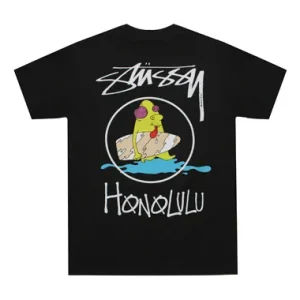
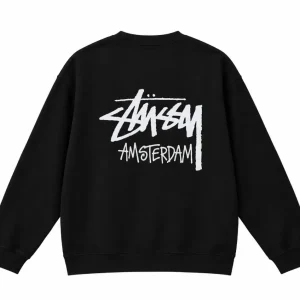
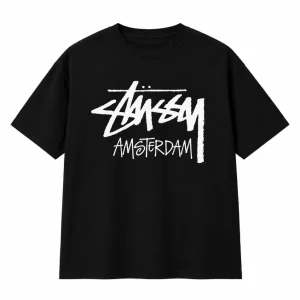
Each city appears across several garment types rather than a single tee, so you can pick the place first and the piece second. Amsterdam runs as a crewneck and a shirt. Honolulu covers the widest spread, from fleece zip-ups to pullovers to unisex tees. Whichever you choose, every Stussy clothing hoodie and tee in this collection carries the same city-name layout that started in 1989.
The Pacific Thread
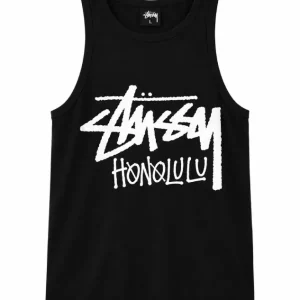
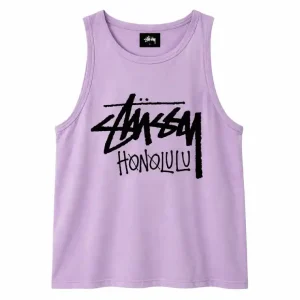
Honolulu deserves its own mention because it is the one people search for most, and the reason is not obvious from the outside. Shawn Stussy stepped back from running the company in the mid-1990s and moved to Hawaii to spend time with his family. The islands are part of the brand's actual biography rather than a name chosen off a map.
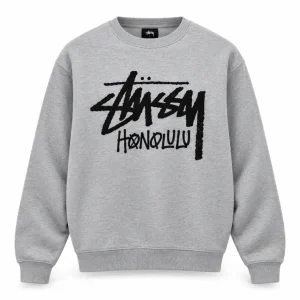
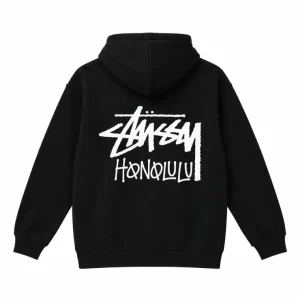
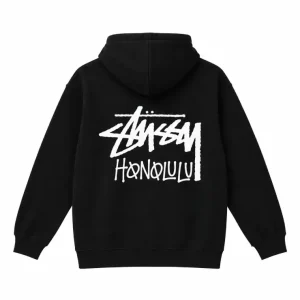
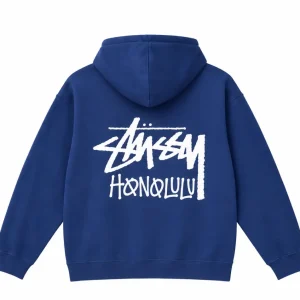
That history is why the Stussy Honolulu pieces carry weight with longtime collectors, and why the wider Hawaii range sits alongside them. Honolulu covers fleece zip-ups, pullovers, and tees in black, blue, grey, and white, so it works whether you want a Stussy hoodie or something lighter.
Choosing a City Piece
Most people pick a city they have lived in, visited, or want to reach. That is a perfectly good way to buy this. If you want a second angle, the older cities carry more of the original World Tour association, while the newer additions read as more current.
On the garment side, tees are the truest to the original 1989 design since that is what it was made as. A Stussy hoodie Stussy releases in a city colourway is the warmer route, and a Stussy shirt gives you the graphic without the bulk. All three are in the range for most cities.
Ask Before You Order
What is the Stussy World Tour tee?
It is the design this whole collection comes from, first released in autumn 1989. The front lists fashion capitals in formal Helvetica type, New York, Los Angeles, Tokyo, London and Paris, while the back lists neighbourhoods where street culture was genuinely growing, including the Bronx, Compton, Santa Ana, Brooklyn and Venice.
The concept was to set two worlds against each other on one garment. High-end fashion on the front, the street on the back. That contrast is why it stuck, and why almost every city-name graphic tee you see today traces back to it in some way.
Why does Stussy put city names on clothing?
It started as a reference to the brand's actual global network. Through the late 1980s Stussy built a loose group of DJs, artists, and shop owners across different cities who wore and spread the brand in their own scenes. The city names on the clothing were a nod to that, not a random design flourish.
Over time the cities also came to mark where the brand had physical stores. So a city piece functions a bit like a souvenir, marking a place you belong to or one you have been to.
Are city pieces only sold in those cities?
Historically some city-specific designs were exclusive to the store in that city, which is a large part of why they became collectable. Getting a Tokyo piece meant either being in Tokyo or knowing someone who was.
That model has loosened over the years, and city designs now reach a much wider audience. Being honest with you though: specific colourways and city combinations still come and go, and once a run is finished it does not usually return. So if a particular city and colour matters to you, waiting is the risk.
Which city design should you choose?
Start with a place that means something to you personally, since that is what makes a city piece worth wearing rather than just another graphic. Beyond that, Honolulu and the original World Tour cities carry the deepest connection to the brand's history, while Amsterdam and the newer additions feel less commonly seen.
Practically, think about how loud you want it. City tees put the name front and centre, which suits people who want the piece recognised. A fleece zip-up in a city colourway is the quieter option, carrying the same reference with less of it on display.