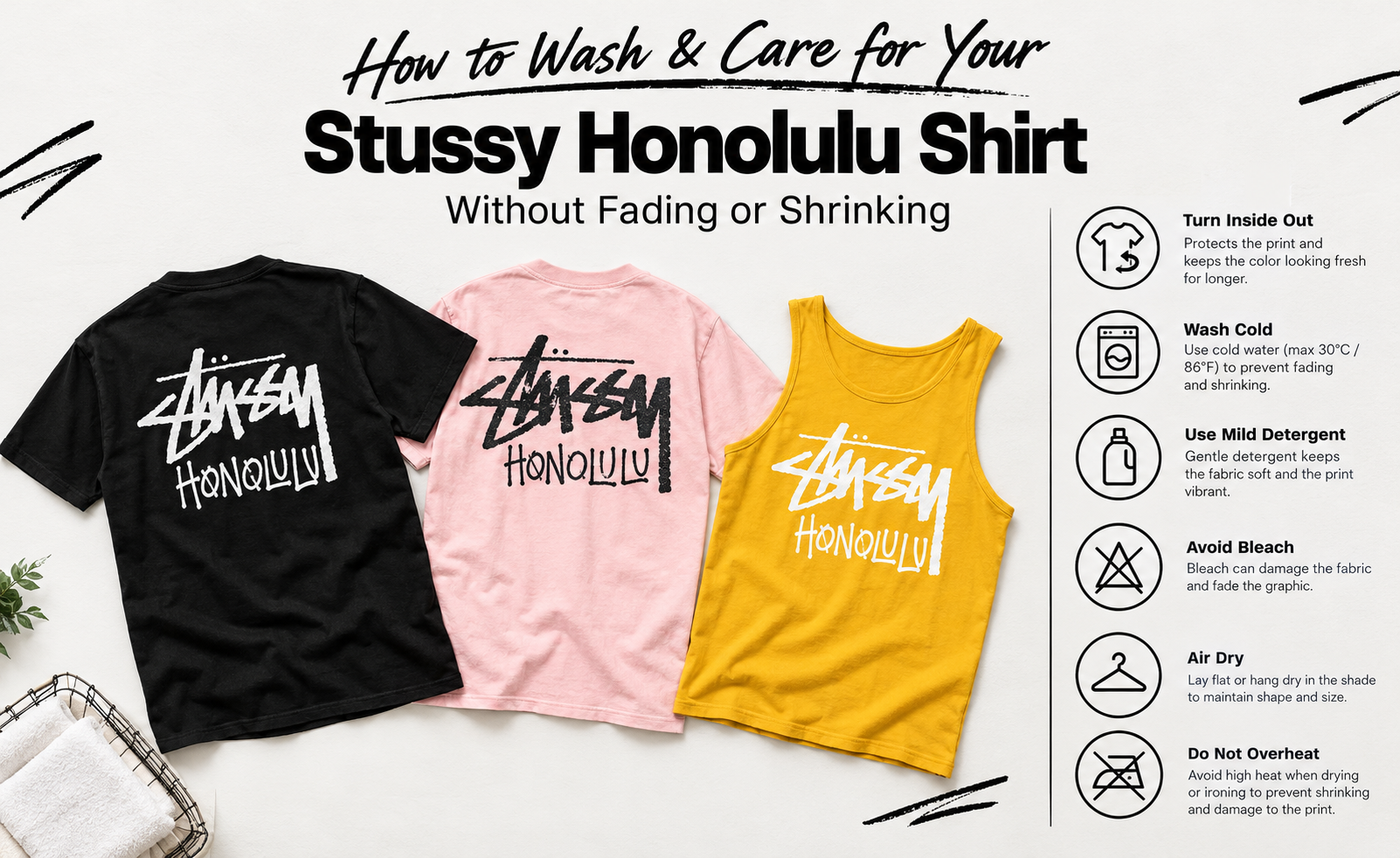
Wondering how to wash stussy honolulu shirt releases so the location-exclusive Hawaii Chapter graphics stay vibrant while the cotton knit keeps its shape? Because Honolulu Chapter store tees are difficult to replace once sold out, applying a proper wash routine protects both your money and your wardrobe.
While our master Stussy Honolulu shirt guide provides an overview of sizing, history, and Chapter availability, this deep-dive guide delivers exact step-by-step care steps. We cover cold water wash cycles, air drying protocols, screen print maintenance, and stain removal routines tailored specifically to 180 GSM carded ring-spun cotton.
Why Turning Your Hawaii Chapter Graphic Tee Inside Out Prevents Print Damage
Before placing your Honolulu tee into the washing machine drum, turn the entire garment inside out. This simple step serves as your primary line of defense against screen print degradation.
Stussy prints its Honolulu Chapter graphics using dense Plastisol ink laid over natural 100% carded cotton yarns. During a standard machine agitation cycle, exposed screen prints scrape repeatedly against metal drum perforations, rough denim seams, and open jacket zippers. Turning the shirt inside out wraps the printed artwork inside a protective cotton layer, absorbing surface friction and preserving soft prints like the classic Stussy Basic Stock Tee.
Spot treatment requires a gentle approach to protect natural dyes. Harsh chemical stain sprays can break down ink pigments if applied directly over front chest graphics. If oil or food lands on your top, apply a single drop of mild liquid laundry detergent directly to the spot. Work the detergent into the fibers using a soft damp cloth rather than scrubbing briskly. Vigorous scrubbing roughs up un-mercerized cotton yarns, creating unsightly surface pilling around the Honolulu script text.
What Machine Settings Protect 100% Cotton Yarns from Shrinking?
Water temperature dictates whether your Hawaii Chapter tee maintains its original size or shrinks down a full size. High water temperatures cause natural carded cotton fibers to contract, pulling the weave tight and shortening both body length and pit-to-pit width.
Set your washing machine controls to cold water or 30°C (86°F). Cold water preserves the structural length of cotton yarns, preventing shrinkage while protecting rich pigment shades like washed black, forest green, or navy.
Agitation speed matters just as much as water temperature. Standard laundry cycles agitate aggressively, which stretches 1-inch double-needle ribbed neck collars out of shape over repeated washes. Select the delicate or gentle cycle to minimize drum friction and keep your neckline laying flat.
Cap machine spin speeds at 600 RPM. Rapid spin speeds extract water efficiently, but intense centrifugal force twists heavyweight cotton tops into tight knots. This twisting places unnecessary tension on shoulder seams and back panel graphics.
How to Air Dry Honolulu Chapter Tees to Avoid Heat Damage
Tumble dryers destroy screen-printed streetwear faster than any other appliance. The combination of intense heat and persistent drum friction melts heat-sensitive Plastisol ink, causing graphics to crack, peel, or stick together in folds.
Air drying is essential if you want to prevent shrinkage and keep prints smooth. However, hanging a wet 180 GSM cotton top on a thin wire hanger creates new problems. Heavy water weight pulls damp cotton downward, stretching the neckline out of proportion while leaving permanent hanger bumps on the shoulders.
Lay the damp tee flat on a clean towel or mesh drying rack. Smooth out the body panels and graphic print with clean hands to prevent drying creases from setting into the fabric.
If you choose to dry your shirt on an outdoor line, keep the garment turned inside out in a shaded area. Direct sunlight breaks down cotton dyes quickly, turning dark black and navy shades into dull charcoal tones after just a few wash cycles.
Before making secondary market purchases for rare colorways, review fabric specs and authenticity details in our guide evaluating if Stussy Honolulu shirts are worth it on quality and GSM weight.
How to Remove Creases Without Melting Screen-Printed Graphics
Placing a hot clothes iron directly over Plastisol screen prints ruins the shirt instantly. Direct iron heat melts the plasticized ink layer, smearing the artwork across the cotton body and leaving sticky residue on your iron soleplate.
Keep the garment turned inside out whenever you iron. Set your iron temperature to low or cotton-steam without pressing down firmly. Place a clean cotton press cloth or thin tea towel over the backside of the graphic to distribute heat evenly without scorching the print.
A vertical garment steamer offers a safer alternative. Hold the steamer nozzle roughly 2 to 3 inches away from the cotton fabric on unprinted sections, letting steam moisture relax creased fibers naturally.
Avoid directing hot steam against the face of a heavy screen print. Moisture trapped under dense ink layers can cause the print to lift away from the underlying cotton weave.
How Proper Storage Preserves Collar Structure and Graphic Panels
Proper wardrobe storage keeps heavyweight cotton tees looking crisp between wears. Hanging heavy cotton tops on narrow plastic or wire hangers stretches out the collar line over time, creating an unsightly loose neckband.
Fold your tees neatly on a clean shelf or inside a deep dresser drawer. Folding eliminates structural tension on the crewneck collar, keeping the cotton body smooth without creating stress lines across the screen print.
When folding, avoid creasing directly through the middle of large back graphics or front chest prints. Repeated hard folds across identical print paths weaken the ink bond over time, causing cracking along those fold lines.
To compare how Honolulu Chapter exclusives fit relative to mainline graphic drops, explore our guide on how Stussy Honolulu shirts fit across body builds.
Honest Limitations: Who This Care Regimen Is NOT For
While these careful steps extend garment lifespan, this care method may not suit every lifestyle.
- People needing rapid laundry turnarounds: Air drying heavy carded cotton tees on a flat rack takes 12 to 24 hours depending on room humidity. If you rely on 45-minute wash and dry cycles, this process will feel inconvenient.
- Garments with heavy grease or oil stains: Cold water and gentle liquid soap struggle to lift deep oil stains or ground-in grease spots. Heavy stain removal requires warm water soaks that can degrade printed graphics over time.
- True vintage single-stitch items needing restoration: Archival vintage cotton pieces often require specialized soak baths like Oxiclean restoration rather than standard machine washing.
Final Care Recommendation
To keep your Stussy Honolulu Chapter shirt looking fresh without fading or shrinking, always flip the garment inside out, wash in cold water at 30°C on a gentle cycle, and use mild liquid detergent. Never put printed Chapter tees in a heat dryer. Lay your shirt flat to air dry on a mesh rack away from direct sunlight, and fold it neatly in your drawer to keep the collar crisp and the graphics sharp.Stussy
To evaluate how Honolulu Chapter tees stack up against standard catalog drops, read our detailed comparison of Stussy Honolulu Chapter shirts vs standard Stussy tees.