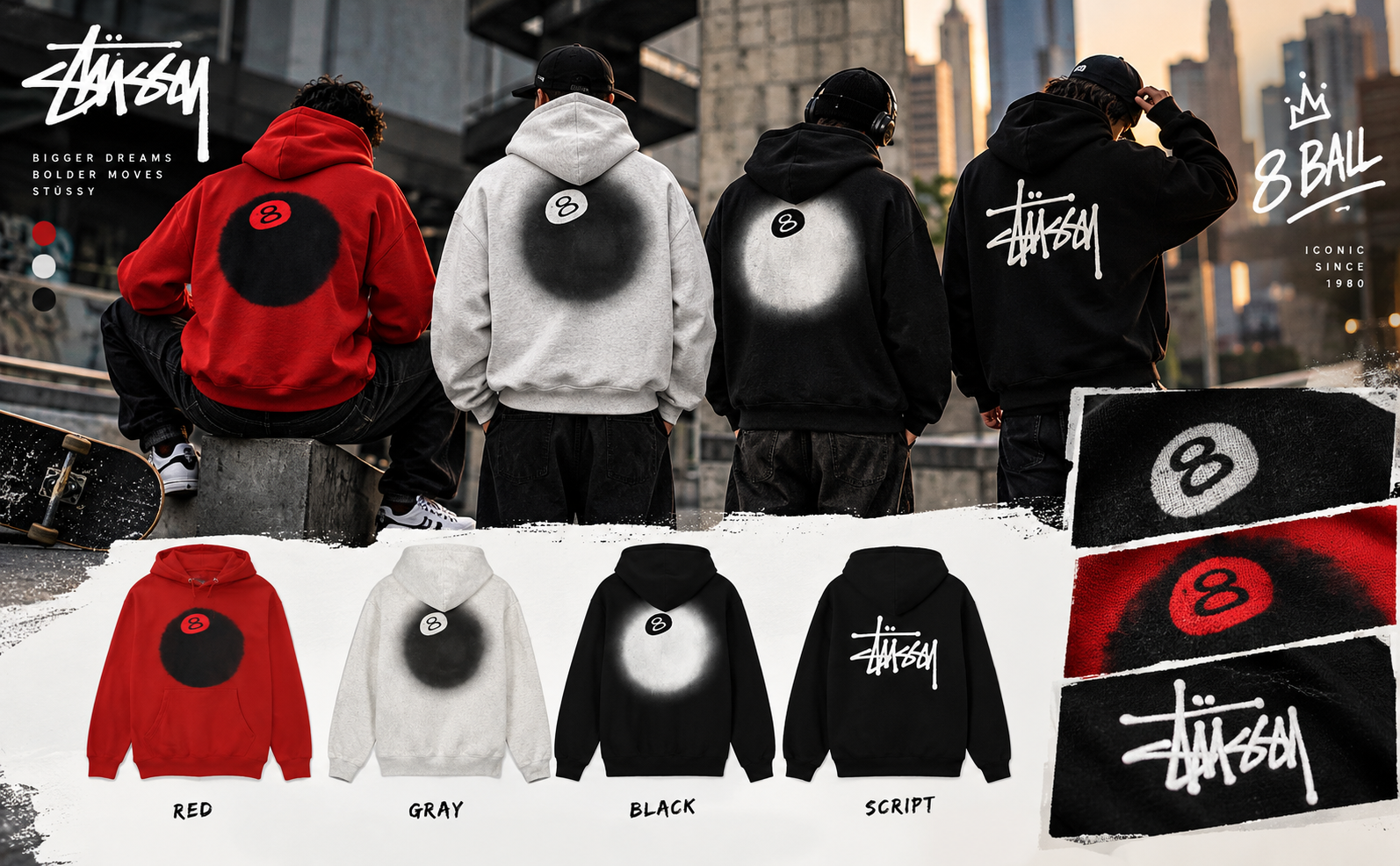
Is paying well over $100 for a streetwear hoodie actually justified, or are you just paying for a famous screen-printed logo? If you have been looking to upgrade your wardrobe, you have probably asked yourself: are Stussy Clothing hoodies worth it? Between shifting manufacturing locations, fluctuating fleece weights, and the massive hype surrounding drops, getting a clear answer on genuine fabric quality can be difficult.
In this deep dive, we break down the exact materials, structural stitching, weight metrics, and real-world durability of Stussy fleece. Whether you are aiming for a classic stock logo pullover or an enzyme-washed pigment piece, this guide gives you the exact technical details you need to decide if they belong in your closet. For a complete breakdown covering sizing charts, fit comparisons, and wash guidelines across the entire lineup, check out our ultimate Stussy hoodie sizing and care guide.
The Technical Reality of Stussy Fabric: 450 GSM Heavy Fleece
When assessing streetwear fleece, fabric weight and weave construction determine whether a garment holds its structure or collapses after five washes. Stussy primarily uses two main fleece weights across their core seasonal collections: a heavy 450 GSM (grams per square meter) cotton-poly blend and a lighter 330 GSM dry fleece.
The flagship 450 GSM fleece is where the brand earns its reputation for heavy, substantial streetwear. It relies on a dense 80% cotton and 20% polyester blend. The high cotton ratio provides a soft, breathable hand-feel on the outside, while the polyester content acts as an internal anchor. Pure 100% cotton fleece of this weight tends to stretch out at the elbows and hem over time. The 20% synthetic integration ensures the hoodie retains its boxy silhouette through repeated wear.
Inside, the fleece is dry-brushed rather than overly combed. Cheaper hoodies use synthetic, fluffy interior brushing that sheds aggressively onto white tees and pills into tiny lint balls within weeks. Stussy’s dry-brushed interior maintains a slightly firm texture that breaks in gradually, becoming softer with every wash while keeping its structural density intact.
Structural Construction, Ribbing, and Hood Architecture
Fabric weight means very little if the construction details fail under physical stress. Stussy hoodies incorporate several structural choices that elevate them above standard blanks:
- Double-Layered Hood Architecture: The hood uses a heavy, self-fabric double layer rather than a thin single-layer jersey lining. This adds significant structural support, allowing the hood to stand up clean around the neck without drooping flat against your shoulders.
- Heavyweight 2×2 Ribbed Cuffs and Hem: Cheap fleece often uses weak ribbing that loses elasticity, leaving you with flared cuffs and a loose waistband. Stussy uses a tight 2×2 ribbing with reinforced elastane threading. It grips the wrists firmly and sits snug at the waistline, which allows you to tuck the waistband under for a cropped look.
- Flatlock and Coverstitch Seaming: Key stress zones—such as the armhole joinery, shoulder slopes, and kangaroo pouch attachment points—feature double-needle coverstitching. This prevents seam popping when pulling the garment on and off.
- Side Panel Gussets (Select Models): On premium Pigment-Dyed and Made in USA lines, side rib panels are added to absorb cross-grain tension, allowing full lateral movement without pulling on the central front panel.
Screen Printing vs. Embroidery: Pigment Dyeing Performance
The graphics on a Stussy hoodie usually fall into three categories: standard plastisol screen prints, high-density embroidery, or garment pigment dyes.
Standard plastisol prints feature clean, crisp graphics, but they require proper care. If you wash them in hot water or throw them in a high-heat dryer, the ink will crack. Embroidery, on the other hand, is applied with tight, high-density stitching and a soft backing layer on the inside so the thread work does not irritate your skin.
The pigment-dyed collection offers a distinct advantage for long-term wear. Instead of printing over finished fabric, the entire garment is dyed after assembly. This process creates a weathered, vintage patina along the seams and hood edges. Because the color is already faded and softened, pigment-dyed hoodies resist visible wash wear and actually look better as they age.
If you prefer a minimal aesthetic over large back graphics, the subtle chest detailing on the Stussy Basic Applique Hoodie offers high-end embroidery that stays pristine over years of continuous wear.
Longevity and Real-World Wear: Durability Over Time
To test how well these hoodies hold up, we evaluated a 450 GSM Stussy stock hoodie through six months of heavy weekly rotation, including over 20 wash cycles.
The initial stiffness of the 450 GSM fleece breaks down around the fourth wash, relaxing into a soft, comfortable drape without losing its heavyweight feel. The cuffs and waistband retained over 90% of their original elasticity, staying snug against the wrists without sagging.
Pilling was minimal along high-friction areas like the underarms and inner side panels. Thanks to the tight weave of the outer cotton face, thread snagging is rarely an issue during everyday use. However, color retention varies based on the finish you choose. Deep black and navy standard-dyed pieces show slight wash-wear along the seams if laundered in warm water. Cold water washing with gentle detergents is essential if you want to preserve dark tones.Stussy clothing hoodie
First-Hand Seller Insights & Genuine Limitations
Hands-On Observation
Having handled hundreds of Stussy fleece garments across multiple seasonal drops, one clear detail stands out: country of origin dictates physical hand-feel. Pieces produced in the USA or Canada consistently feature a stiffer, drier, and more structured cotton hand-feel out of the bag. In contrast, production runs out of China or Guatemala tend to feel softer immediately due to pre-wash treatments, but they are slightly less rigid along the hood seam.
Honest Limitation: Who This Is NOT For
Despite the high quality, Stussy hoodies are not the right choice for everyone.
First, if you prefer a slim, tailored, or athletic fit, you will likely dislike the native cut of a Stussy hoodie. The brand uses a streetwear fit defined by dropped shoulders, wide chest measurements, and extra sleeve length. Sizing down to fix this often results in a waistband that sits too high on your waist while leaving the shoulders excessively broad.
Second, if you live in a warm climate or run hot, the 450 GSM fleece will simply be too heavy for daily wear. It acts as a serious insulator, making it uncomfortable for mild spring or summer days without heavy layering beneath.Stussy
Final Verdict: Are Stussy Hoodies Worth It?
Yes, Stussy hoodies are worth the price if you value structural durability, heavy fleece weights, and a classic boxy silhouette. The combination of 450 GSM 80/20 cotton-poly fabric, double-layered hood construction, and durable 2×2 ribbing ensures these hoodies easily outlast fast-fashion alternatives. Rather than wearing out after a single season, a well-cared-for Stussy fleece maintains its shape for years.
If you prefer vintage washes and extra soft fabric, opt for their pigment-dyed lines. If you want maximum longevity with zero graphic cracking, go for their embroidered or appliqué options.